

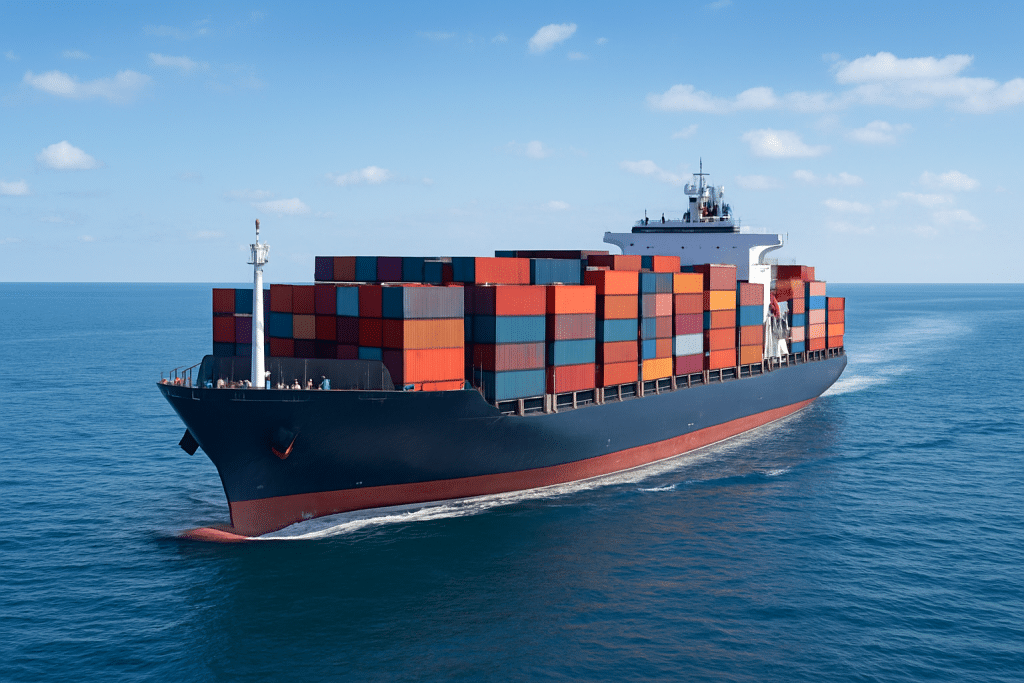
After two years of turmoil in the Red Sea, the crisis has officially come to an end. Yemen’s Houthi movement announced it would cease all attacks on vessels linked to Israel and suspend its operations targeting international shipping in the Red Sea and Gulf of Aden.
A Turning Point for Global Shipping Routes
Since the U.S.–Houthi truce brokered by Oman in May 2025, the Houthis had limited their attacks—at least in theory—to vessels with Israeli affiliations. However, due to repeated targeting errors, many global carriers, including Maersk, MSC, and Hapag-Lloyd, had rerouted ships around the Cape of Good Hope to avoid potential strikes.
Now, with the Houthis officially declaring a suspension of attacks, this widespread threat has been lifted. Normal maritime traffic through the Red Sea and the Suez Canal is expected to resume gradually after a short period of caution. The return of safe navigation will bring much-needed revenue to the Suez Canal Authority, although it may negatively impact long-haul carriers that benefited financially from the Cape route.
Leadership Change Behind the Ceasefire
The shift in the Houthis’ stance was announced in an open letter by Major General Yusuf Hassan Madani, the newly appointed Chief of Staff, following the death of his predecessor Major General Mohammed al-Ghamari, who was killed in an airstrike on August 28, along with Yemen’s prime minister and much of the cabinet. Al-Ghamari was widely regarded as the architect behind the group’s anti-shipping and anti-Israel missile campaigns.
In the statement, the Houthis not only pledged to stop targeting vessels linked to Israel but also vowed to lift their “blockade” of Israeli ports—previously enforced through sporadic ballistic missile attacks. While the overall security situation has improved, the group reaffirmed its loyalty to Hamas, suggesting hostilities could resume if the Gaza ceasefire collapses.
Mounting Pressure and Regional Diplomacy
Observers believe the Houthis’ decision reflects mounting pressure from sustained Israeli and U.S. airstrikes, which have destroyed much of their missile and drone infrastructure and caused heavy casualties among senior leaders. The group also risks political isolation as regional reconciliation advances.
Recent appearances by Syrian President Ahmad Shara and Yemeni National Resistance leader Tariq Saleh at the UN Climate Conference (COP30) in Brazil highlight the shifting regional landscape. Continued militant actions by the Houthis could undermine their standing amid growing diplomatic engagement.
Oman’s mediation efforts are widely seen as a key factor in bringing the Houthis back to the negotiation table, even though the group has not publicly acknowledged this influence.
Timeline: The Red Sea Crisis (2023–2025)
-
Trigger: October 2023 – Outbreak of the Israel–Hamas conflict.
-
Nov 19, 2023: Houthis announce a “blockade” of ships bound for Israel and hijack the Galaxy Leader in the Red Sea (Japanese-owned, UK-managed, leased by an Israeli company).
-
Dec 2023: Multiple commercial vessels—including Maersk, MSC, and Hapag-Lloyd ships—are attacked by missiles near the Bab el-Mandeb Strait.
-
Jan 2024: U.S. and U.K. launch Operation Prosperity Guardian, forming a multinational naval escort coalition.
-
Feb 2024: Houthis begin launching anti-ship ballistic missiles (ASBMs) targeting large tankers and container ships.
-
Mid–Late 2024: Attack zones expand to the Gulf of Aden and Gulf of Oman; major carriers reroute via the Cape of Good Hope.
-
Nov 12, 2025: Houthis officially halt all maritime attacks — marking the formal end of the Red Sea crisis.
First Large Vessel Re-Enters the Red Sea
In a symbolic development, CMA CGM Benjamin Franklin (IMO 9706891, 17,859 TEU) became the first 18,000-TEU-class vessel to successfully transit the Suez Canal since the crisis began. The vessel departed Southampton on October 25 and passed through the canal in early November, signaling the reopening of one of the world’s most vital trade arteries.
What This Means for Global Trade
The end of the Red Sea crisis is expected to:
-
Reduce global freight rates by shortening sailing times.
-
Rebalance vessel capacity between Asia and Europe.
-
Restore supply chain predictability for importers and exporters worldwide.
For freight forwarders and shippers, this development offers new opportunities to optimize transit routes and reduce costs.
Contact us today to discuss how our logistics solutions for shipping from China to Europe and the Middle East can help you take advantage of safer, faster Red Sea transit options.