

1. Policy Overview
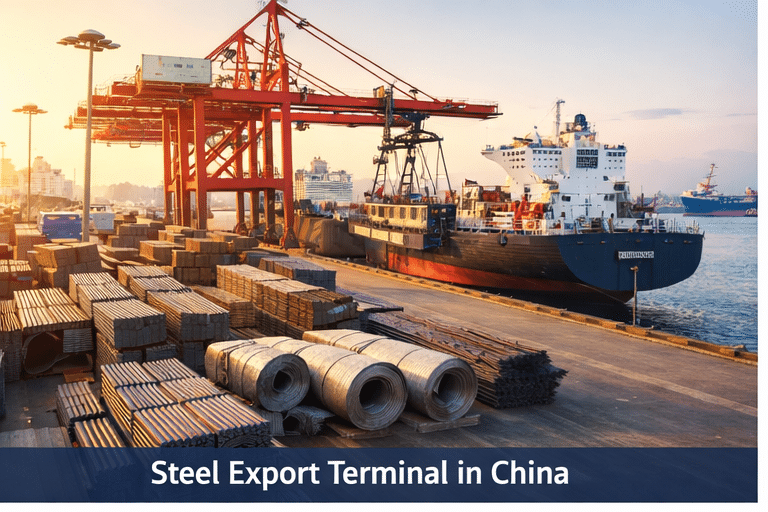
On December 9, 2025, China’s Ministry of Commerce (MOFCOM) and the General Administration of Customs (GAC) jointly issued Announcement No. 79 of 2025, stating that starting January 1, 2026, certain steel products will be subject to export license management.
Exporters of these listed products will be required to obtain export licenses prior to shipment. The measure reflects China’s renewed effort to regulate steel exports, improve oversight, and support sustainable industrial development.
2. Policy Background and Objectives
In recent years, China’s steel exports have grown rapidly, reaching record volumes. However, this growth has been accompanied by an increasing share of low value-added products, resulting in weaker export profitability and rising international trade tensions.
The reintroduction of export license management aims to:
-
Improve product quality standards,
-
Optimize the export structure, and
-
Promote high-quality, sustainable growth in the steel sector.
The policy also serves as a strategic response to global trade frictions and anti-dumping measures against Chinese steel products, ensuring the long-term stability of China’s export market.
3. Legal and Administrative Basis
The new regulation is grounded in several key national laws, including:
-
The Foreign Trade Law of the People’s Republic of China
-
The Import and Export Commodity Inspection Law
-
The Administrative Measures for Export Licenses of Goods
These laws provide the legal foundation for the Ministry of Commerce and local commerce authorities to review, issue, and supervise export licenses, ensuring compliance with both domestic policies and international trade commitments.
4. Scope of Products Covered
According to the announcement, the Catalogue of Commodities under Export License Administration (2025) has been updated to include nearly 300 customs commodity codes related to steel materials.
The affected products include:
-
Raw steel and pig iron,
-
Semi-finished steel,
-
Hot-rolled and cold-rolled sheets,
-
Steel bars, wire rods, and other rolled products.
This adjustment effectively brings the entire steel industry chain—from raw materials to finished products—under export license supervision.
5. Application and Issuance Process
Enterprises exporting listed steel products must apply for an export license before shipping. The process requires:
-
A valid export contract;
-
A product quality inspection certificate issued by the manufacturer;
-
Supporting documents for customs declaration.
Licenses will be reviewed and issued by provincial and municipal commerce authorities authorized by MOFCOM. Each export license will include a unique identification number that must be declared at customs clearance.
This procedure ensures traceability, transparency, and accountability throughout the export process.
6. Implementation Timeline
The export license management system will take effect on January 1, 2026.
From that date, any covered steel product exported without a valid license will not be cleared by customs.
Exporters are advised to:
-
Review the official product list in advance;
-
Familiarize themselves with the new application process;
-
Adjust export schedules to prevent delays.
7. Expected Industry Impact
Industry experts emphasize that the new policy is not intended to limit total export volumes, but rather to promote the export of high value-added and high-quality products.
The expected positive outcomes include:
-
Improved traceability and quality control,
-
Enhanced global reputation of Chinese steel,
-
Reduction in trade disputes and dumping accusations, and
-
Greater alignment with green, low-carbon development goals.
In the long term, this policy will accelerate China’s transformation from a steel manufacturing giant to a global leader in steel innovation and quality.
8. Implications for Global Trade
China remains the world’s largest steel producer and exporter, accounting for more than 50% of global steel output. The introduction of export license management is likely to influence global steel supply chains and pricing, particularly in Southeast Asia, the Middle East, and Africa, where Chinese steel has a dominant market share.
While short-term supply adjustments may occur, importers and global buyers are expected to benefit from greater product consistency, higher quality standards, and a more predictable export framework over time.
9. Conclusion
The implementation of MOFCOM and GAC Announcement No. 79 (2025) marks a significant milestone in China’s steel trade policy.
Effective January 1, 2026, China will require export licenses for selected steel products, reinforcing its commitment to trade compliance, industrial upgrading, and quality assurance.
This policy represents a shift from volume-driven exports toward a value-oriented, sustainable export model, aligning with China’s broader goals of industrial modernization and responsible global trade engagement.